Witness millions of wildebeest and zebras traverse crocodile-infested rivers and endless plains. Fully custom private packages designed by local guides.
The Great Wildebeest Migration is the largest movement of land mammals on the planet. Over 1.5 million wildebeest, joined by 200,000 plains zebras and 300,000 gazelles, journey in a relentless 1,800-mile loop across the Serengeti-Masai Mara ecosystem annually.
Driven by evolutionary survival instincts and seasonal rainfall patterns, the herds seek fresh grazing pastures and drinking water. Along the way, they navigate treacherous river crossings and dodge heavy concentrations of predators, presenting the ultimate theater of African wildlife.
Click the month tabs below to trace the real-time movement of the herds, review active zones, check seasonal weather patterns, and locate recommended lodges.
Use this comprehensive reference guide to plan your safari dates based on the annual migration cycle.
| Month Period | Migration Zone | Key Wildlife Event | Safari Conditions |
|---|---|---|---|
| January – March | Southern Serengeti & Ndutu Conservation Area | Calving season starts. 500,000+ calves born within 3 weeks. Extreme predator-prey clashes. | Dry and sunny. Clear photography skies. Dusty plains with short grasses. High visitor count. |
| April – May | Central Serengeti moving to Western Corridor | Rutting (mating) season begins. Herds move in massive columns north-westward. | Long rains. Green landscapes and empty parks. Low pricing rates. Muddy tracks. |
| June | Western Corridor & Grumeti River crossings | Herds face first river obstacle at Grumeti River. Crocodile activity increases. | Cool, dry. Easy game tracking as grass levels drop. Moderate crowd levels. |
| July – October | Northern Serengeti (Kogatende) & Masai Mara | Dramatic Mara River crossings peak. Wildebeest dodge giant crocs and strong currents. | Completely dry. High visitor density. Lodges require booking 12 months ahead. Peak pricing. |
| November – December | Northern Serengeti returning South | Short rains trigger herds to run south along the eastern border to reach calving grounds. | Green fields starting. Brief afternoon showers. Lower rates and small crowds. |
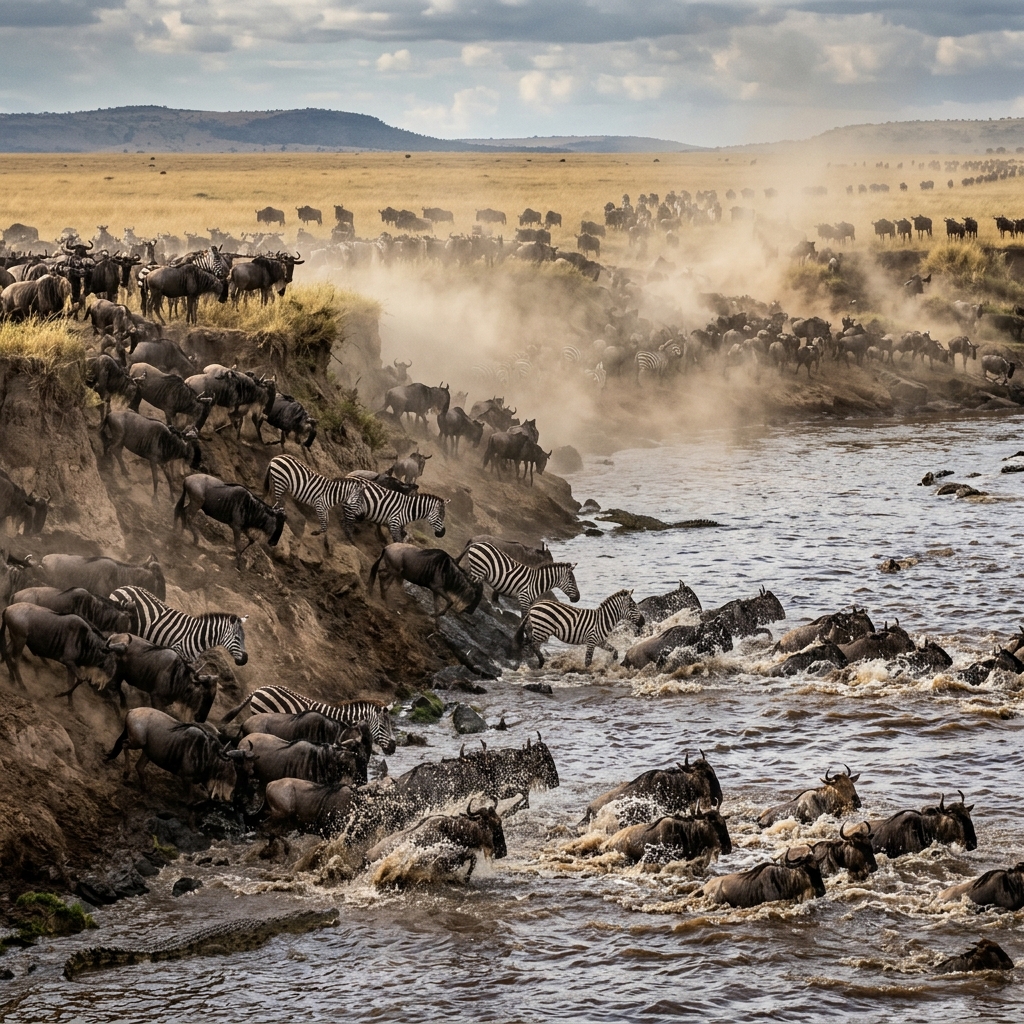
The Mara River crossings are the ultimate drama of the migration cycle. From July to October, herds congregate along the banks of the Mara River in Northern Serengeti. Driven by pressure to feed, they must cross to reach the opposite bank.
Wildebeest will stand along the edge of the steep cliffs for hours—sometimes days—building up courage. When one brave individual finally leaps, a stampeding avalanche of thousands follows, leaping into the fast-flowing waters inhabited by giant Nile crocodiles.
Watching this requires extreme patience. Our expert guides position vehicles carefully to avoid spooking the herds, adhering to local park wildlife safety protocols while giving you the best view.
Vetted itineraries timed to put you at the center of the herds. Fully customizable with private 4x4 vehicles and guides.
Common questions answered by our safari specialists.
The Great Wildebeest Migration is the largest herd movement of land animals on Earth. Over 1.5 million wildebeest, 200,000 zebras, and 300,000 gazelles travel in a continuous 1,800-mile clockwise loop through the Serengeti-Masai Mara ecosystem annually, chasing seasonal rains and fresh grasslands.
The best time depends on what you want to witness. For the dramatic Mara River crossings, visit Northern Serengeti between July and October. For the calving season, where 500,000+ calves are born, visit the southern plains of Serengeti and Ndutu between January and March.
River crossings happen primarily at the Grumeti River (Western Corridor) in June and the Mara River (Northern Serengeti/Kogatende) from July to October. The Mara River crossings are the most famous, featuring deep water, steep banks, and giant Nile crocodiles.
No, crossings can never be 100% guaranteed. Wildebeest are highly unpredictable—they can gather at the riverbank for hours or days before crossing, or split up suddenly. Booking a migration safari with an experienced guide who knows how to read herd behavior maximizes your chances.
During January and February, the herds settle in the nutrient-rich Southern Serengeti and Ndutu plains. Over a 2-3 week period, roughly 500,000 wildebeest calves are born. This high concentration of vulnerable young attracts massive numbers of predators (lions, cheetahs, leopards, and hyenas), leading to intense wildlife action.
From April to May, during the long rains, the herds move through the Western Corridor. This is called the Green Season. While road tracks can be muddy, the parks are incredibly quiet, luxury rates are at their lowest, and the landscapes are lush, fresh, and perfect for scenic photography.
The migration occurs almost entirely within the Serengeti National Park ecosystem, though the herds border the Ngorongoro Conservation Area (specifically Ndutu) during the calving months. You must choose your Serengeti lodges carefully based on the month, as the herds travel across different zones.
The herds spend about 9-10 months of the year in Tanzania's Serengeti, and only 2-3 months in Kenya's Masai Mara. The Serengeti offers much larger landscapes, a wider variety of ecosystems, and more opportunities to view the migration in solitude without crowds of vehicles.
We recommend a minimum of 5 to 7 days, with at least 3-4 nights spent directly in the active migration zone (e.g., Northern Serengeti in August, or Ndutu/Southern Serengeti in February). This allows enough time to track the herds, wait patiently at crossing points, and enjoy general game viewing.
We recommend staying in luxury mobile camps (tented camps that move semi-annually to follow the herds) or permanent lodges located near the active zone. For July-October, choose lodges in Kogatende or Northern Serengeti. For January-March, choose Ndutu or Southern Serengeti lodges.
Pack neutral/earth-toned clothing (khaki, beige, green), a high-quality camera with a telephoto lens (300mm+), extra memory cards and batteries (dust can drain batteries), binoculars for spotting distant crossings, sun protection (hat, sunscreen), and warm layers for early morning game drives.
Serengeti National Park fees remain constant throughout the year, but accommodation rates peak significantly during the dry season months (July-October) and the festive holiday/calving peak (January-February) due to high demand.
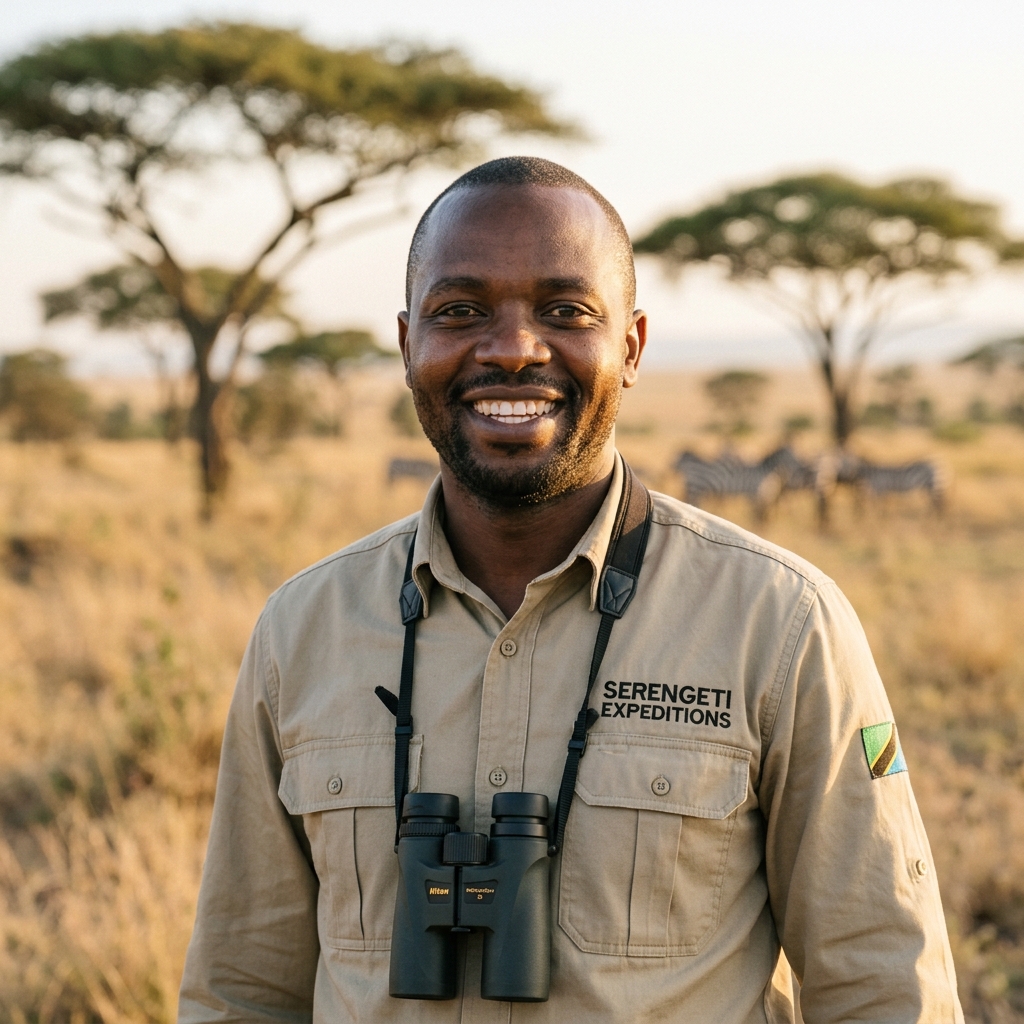
Josephat has spent over 18 years tracking the Wildebeest Migration in the Serengeti. Certified by the College of African Wildlife Management (Mweka) and a licensed guide with the Tanzania Association of Tour Operators (TATO), he has led more than 350 successful migration expeditions.
"The secret to a great migration safari is patience and timing. Choosing a lodge in the active zone rather than driving hours daily makes the difference between an exhausting trip and an unforgettable wildlife adventure."