A Serengeti calving season safari between January and March puts you in the middle of one of the most dramatic wildlife events on Earth, months before the crowds who wait for the July Mara River crossing ever arrive. While most first-time travelers fixate on the Mara crossings, seasoned safari-goers know that the real spectacle — half a million wildebeest calves born in a three-week window — happens quietly on the short-grass plains of the south. If you've already ticked off the "big crossing" on a bucket list, or simply want fewer vehicles and more predator action per game drive, this is the season worth building a trip around.
When Do Wildebeest Calve in the Serengeti?
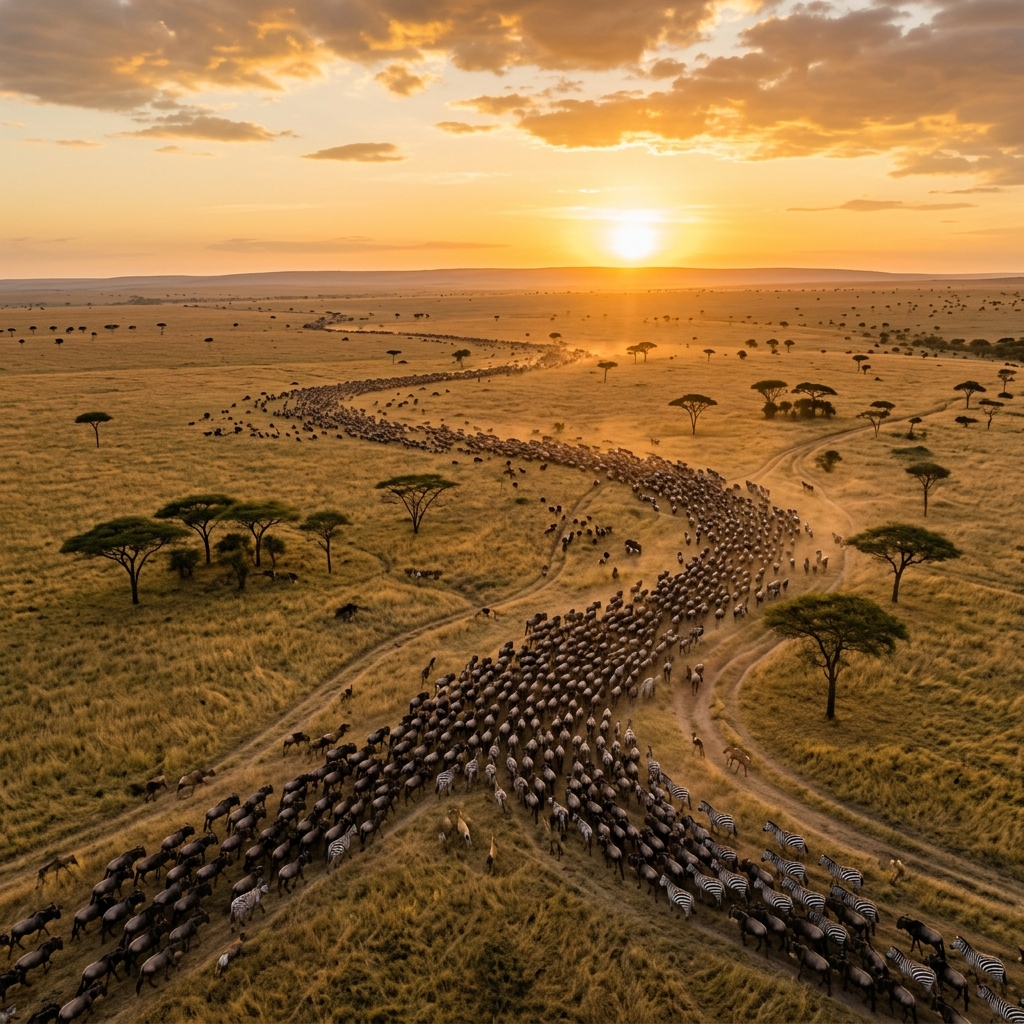
If you're asking when do wildebeest calve in Serengeti, the answer is more precise than most people expect. Roughly 8,000 calves are born every single day during the peak window, concentrated between late January and mid-March. This isn't a slow trickle — it's a synchronized biological event, timed so that the herds give birth on nutrient-rich volcanic soil while predators are momentarily overwhelmed by sheer numbers.
That timing makes a January to March Serengeti safari fundamentally different from a dry-season trip. Instead of tracking a moving migration across hundreds of kilometers, you're based in one concentrated area, watching life (and death) unfold at close range, day after day.
Ndutu Calving Season: The Heart of the Action
The Ndutu calving season is centered on the Ndutu Plains, a region that technically straddles the southern Serengeti and the Ngorongoro Conservation Area. This is where the wildebeest, zebra, and gazelle herds gather in their tightest concentrations, drawn by short grass and mineral-rich soils left behind by ancient volcanic ash.
A Ndutu Plains wildebeest safari during these months typically means:
- Herds numbering in the tens of thousands within a single sightline
- Newborn calves standing and running within minutes of birth
- Open, treeless terrain that makes spotting predators far easier than in the woodland areas further north
- Warm, golden-hour light for most of the day, ideal for photography enthusiasts
Southern Serengeti Safari Season Explained
The Southern Serengeti safari season runs opposite to the more heavily marketed northern crossing months. While July through October pulls the crowds toward the Mara River, the southern plains come alive from December through March. Because fewer operators promote this window, camps here stay smaller and less congested, even during the peak of the births.
Best Time to See Wildebeest Calving — and What It Looks Like
The best time to see wildebeest calving falls squarely in February, when birth rates peak and the plains are dotted with newborns still finding their legs. Unlike the crossing, which lasts mere minutes at a single river point, calving unfolds continuously across the grasslands for weeks — giving you multiple opportunities across a single trip rather than one unpredictable event.
Best Time for Predator Sightings Serengeti
Ask any experienced guide about the best time for predator sightings Serengeti has to offer, and calving season comes up almost immediately. Cheetah, lion, and hyena all shadow the herds closely, and with so many vulnerable calves in the open, predator interactions happen in daylight far more often than during other months. Cheetahs in particular thrive on these plains, using the flat terrain to their advantage in high-speed hunts that are genuinely rare to witness elsewhere in Tanzania.
Great Migration Calving Season Tanzania: How It Fits the Bigger Picture
The Great Migration calving season Tanzania hosts each year is technically the true starting point of the entire migration cycle — everything that follows, including the famous river crossings, begins here. Understanding this gives repeat safari travelers a different, more complete view of the migration story, rather than just the crossing highlight reel most documentaries show.
For travelers who've already experienced a Great Migration safari built around the crossing months, a calving-season trip is less a repeat and more a completely different chapter of the same story.
Serengeti Wildebeest Calving Ndutu Plains: A Day in the Field
A typical day built around Serengeti wildebeest calving Ndutu Plains sightings starts before sunrise. Early light brings out predators still finishing overnight hunts, and the temperature is comfortable for extended game drives. Midday is often spent near waterholes, where mixed herds gather, before a second drive in late afternoon when hunting activity picks up again.
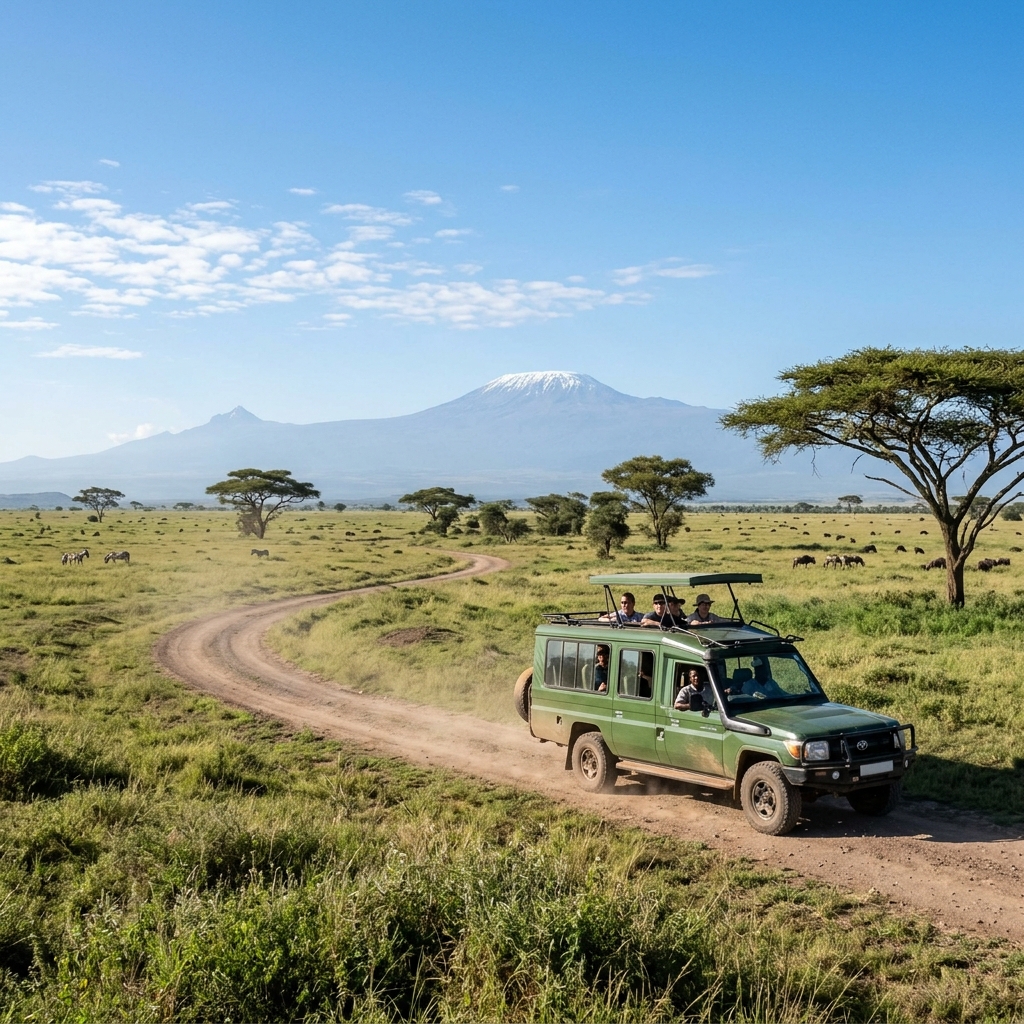
Because the area is more compact than the northern Serengeti, drive times between sightings are shorter — meaning more time actually watching wildlife and less time in transit. This matters especially for photography-focused travelers who want to stay with a single sighting rather than rushing to the next one.
Why This Counts as Serengeti Safari Off-Peak Season — and Why That's a Good Thing
Technically, this is Serengeti safari off-peak season on the booking calendar, which is exactly why it appeals to travelers who've done their homework. Off-peak here doesn't mean lower quality; it means:
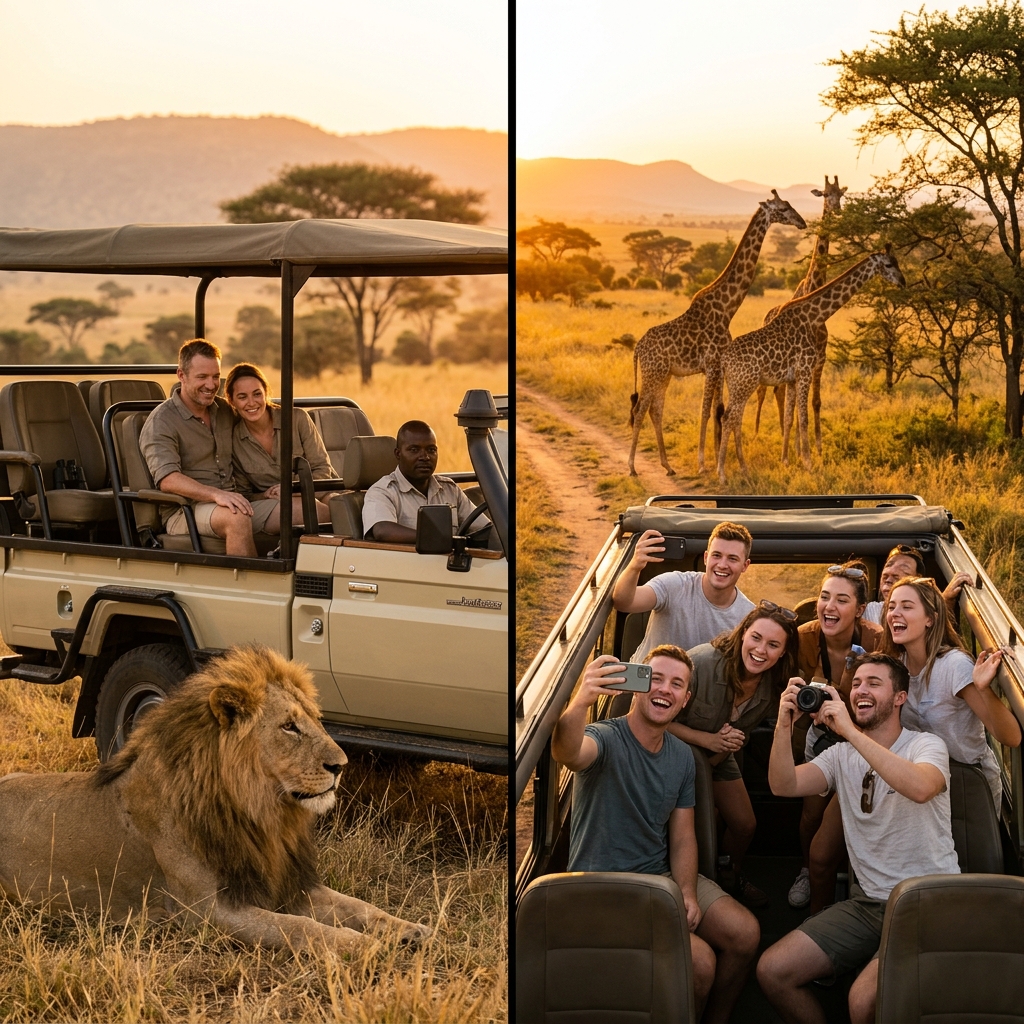
- Fewer vehicles at each sighting, often just one or two instead of a dozen
- More flexible camp rates for the same luxury tented experience
- Better availability at smaller, owner-run camps that book out early for July–October
- A quieter, more immersive pace overall, without competing for the same viewpoint
For couples, small groups, and photographers who value space and quiet over crowd-sourced Instagram spots, this trade-off is an easy one to make.
Planning Your Serengeti Calving Season Safari
Building a Serengeti calving season safari around this window takes more precise planning than a standard dry-season trip, since the exact concentration of herds shifts slightly year to year depending on rainfall. Working with a locally based operator who tracks these patterns in real time — rather than booking a fixed itinerary months out — makes a meaningful difference in where you're actually positioned during peak births.
Our team, based in Arusha and operating tailor-made luxury safaris since 2010, builds each calving-season itinerary around current herd movement rather than a template. If you're weighing this trip against other options, our guide to Tanzania's Northern Circuit breaks down how the southern plains connect to the rest of a longer route, and our breakdown of a 3-day Serengeti safari is useful if you're deciding how many days the calving plains deserve on your itinerary.
Frequently Asked Questions
When do wildebeest calve in the Serengeti? Births are concentrated between late January and mid-March, peaking in February, with the highest activity centered on the Ndutu Plains in the southern Serengeti.
What is the best time to see wildebeest calving? February offers the highest birth rates and the densest herd concentrations, making it the single best month for this specific experience.
Is a January to March Serengeti safari better than the July migration? It depends on what you want to see. A January to March Serengeti safari trades the river-crossing drama for concentrated predator action, newborn wildlife, and significantly fewer vehicles at each sighting.
Why is this considered Serengeti safari off-peak season if the wildlife event is so major? Booking demand simply hasn't caught up with the experience yet. Fewer travelers know to plan around calving, so camps and vehicle numbers stay lower even at the peak of the action.
Do I need to stay in Ndutu specifically, or the wider Serengeti? Most of the calving activity happens on the Ndutu Plains and immediately surrounding areas, so camps positioned there give you the shortest drive times to the densest herds.
Ready to see half a million newborn wildebeest and the predators that follow them, without the crowds of peak season? Plan My Serengeti Calving Season Safari →
YAWAPEPE SAFARIS — 120, Silver Business Park, Arusha, Tanzania